Việt Nam
 English


How Bát Tràng Pottery Is Made: From Clay to Hand-Painted Ceramics
Pick up a finished Bát Tràng bowl, vase or tea set and you will immediately notice its colour, form and painted details. What you cannot see is the journey behind it: clay being prepared, forms taking shape, surfaces being refined, brushes moving steadily across ceramic bodies, glazes changing in the kiln and artisans checking every finished piece.
Understanding how Bát Tràng pottery is made reveals why two apparently similar ceramics can feel completely different. It also shows why this village near Hanoi is more than a place to shop. Bát Tràng remains a working craft community where specialised workshops and skilled hands contribute to different stages of production.
Watch the short video, then follow the six main stages that turn raw clay into a finished Bát Tràng ceramic.
Suggested video placement: Embed the 23-second vertical video directly below this introduction.
Video title: How Bát Tràng Pottery Is Made Inside Real Artisan Workshops
Accessible video description: Local Bát Tràng artisans prepare ceramic forms, work with moulds, shape clay by hand and paint detailed designs, followed by a visitor making pottery on a wheel.
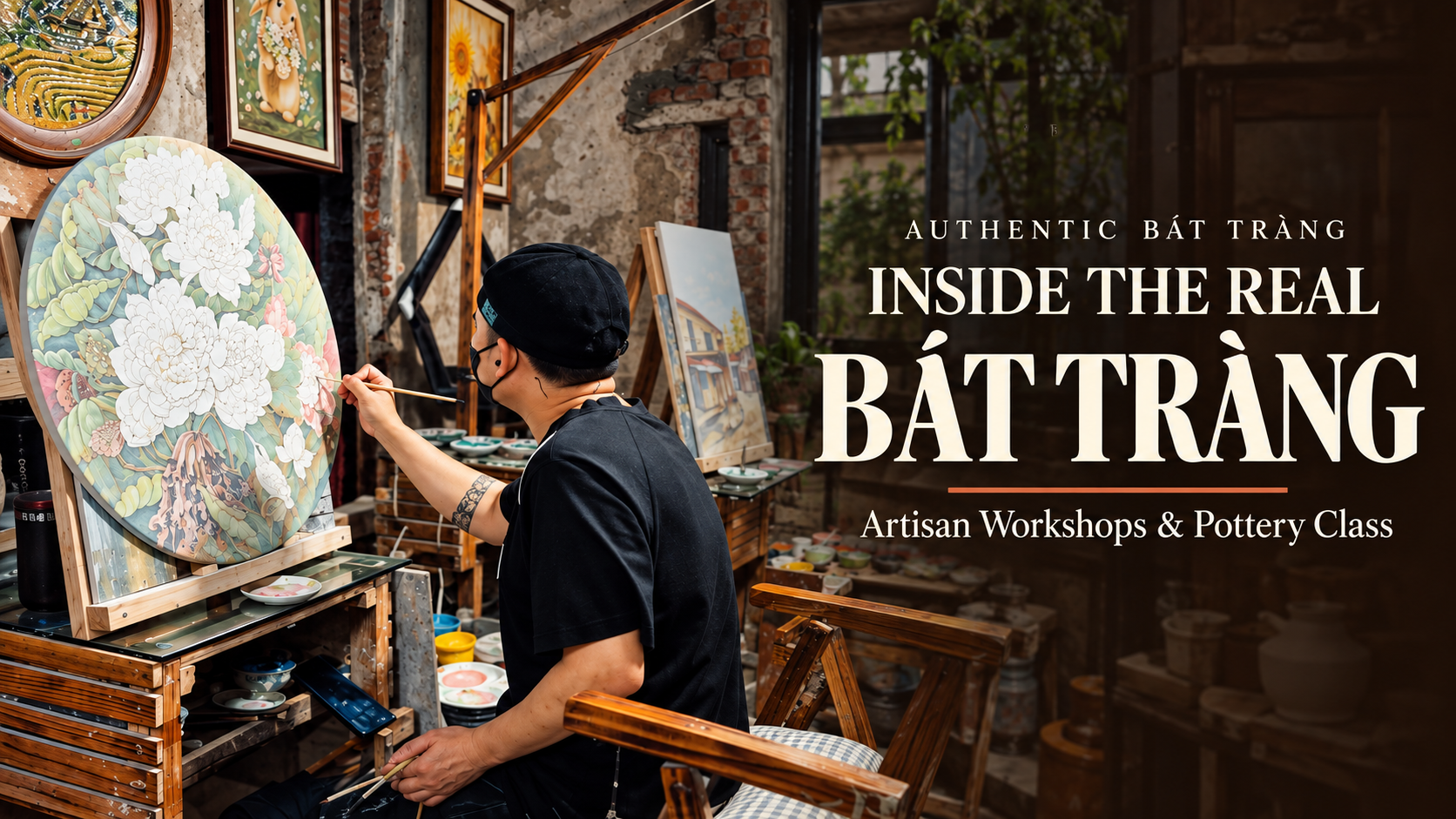
Bát Tràng: A Living Pottery Village Near Hanoi
Bát Tràng sits on the Red River outside central Hanoi and has been associated with ceramics for centuries. Today, its pottery tradition is not confined to a museum. Clay is still prepared, shaped, painted, glazed and fired in active workshops throughout the village.
There is no single room where every ceramic is completed from start to finish. Different families and workshops often specialise in particular skills. One may prepare clay, another may make moulds, another may create large handmade vases, while experienced painters and glazing specialists complete later stages.
This network of expertise is one reason a guided workshop visit feels so different from browsing a pottery market. Instead of seeing only the final product, you see the people, tools and decisions behind it.
The Bát Tràng Pottery-Making Process in Six Stages
The exact order can vary according to the product, glaze and decorative technique. A delicate hand-painted plate will not follow precisely the same route as a large traditional vase. However, most Bát Tràng ceramics pass through six essential stages.
1. Preparing the Clay
Every piece begins with suitable clay. Before an artisan can shape it, the material must be mixed and prepared to achieve the right consistency.
Air pockets, uneven moisture or unwanted particles can weaken a piece and create problems during drying or firing. Good clay preparation makes the material smooth enough to shape while giving it sufficient strength to hold its form.
Inside a clay-preparation workshop, the process may look less dramatic than painting or wheel throwing, but it determines everything that comes afterwards. If the clay is not prepared correctly, even a beautifully shaped object may crack, warp or fail in the kiln.
2. Shaping the Ceramic Form
Bát Tràng artisans use several shaping methods depending on the size, purpose and design of the product.
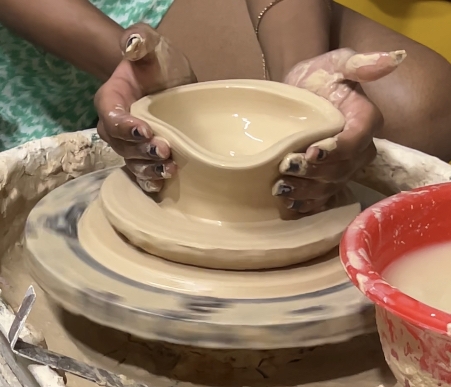
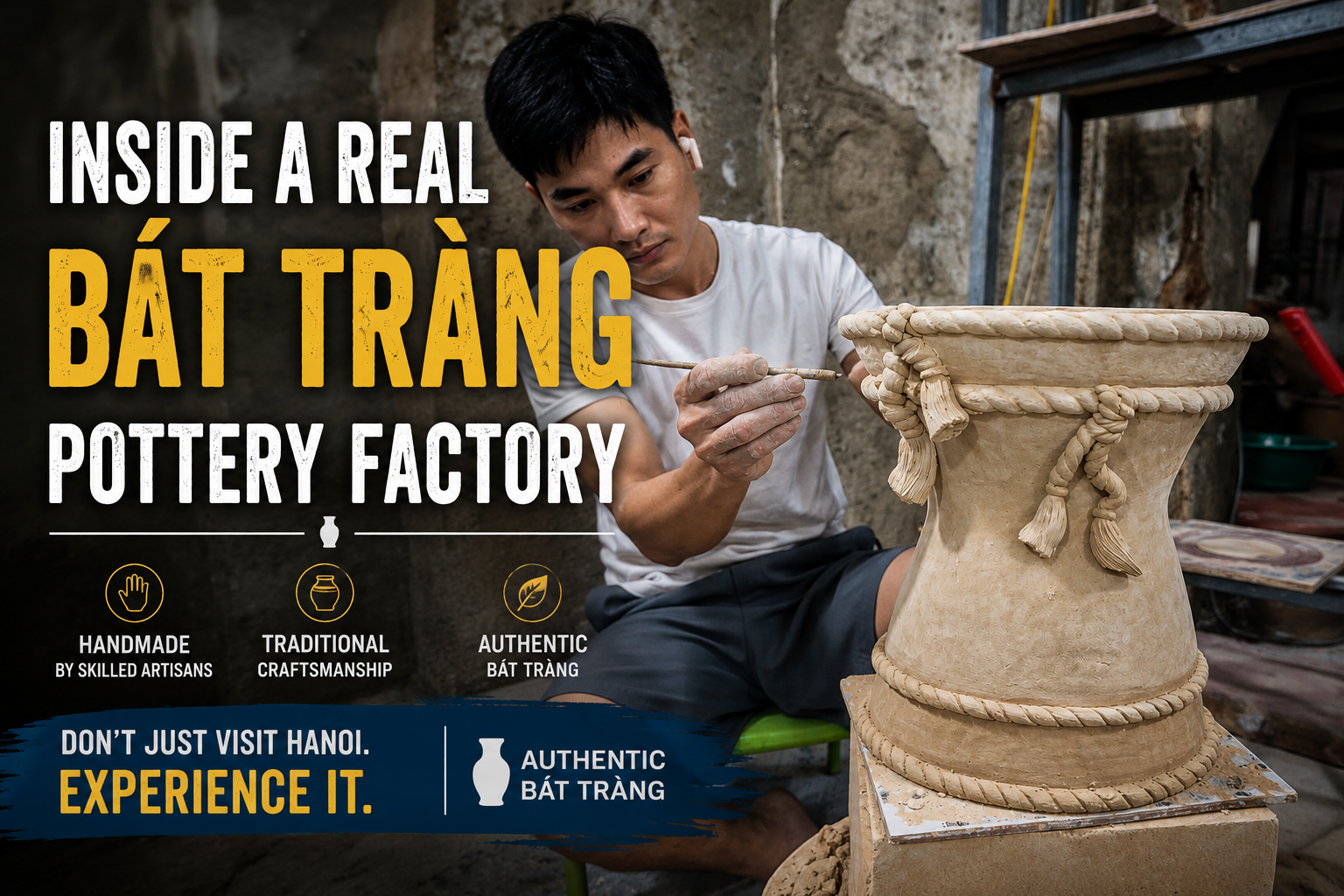
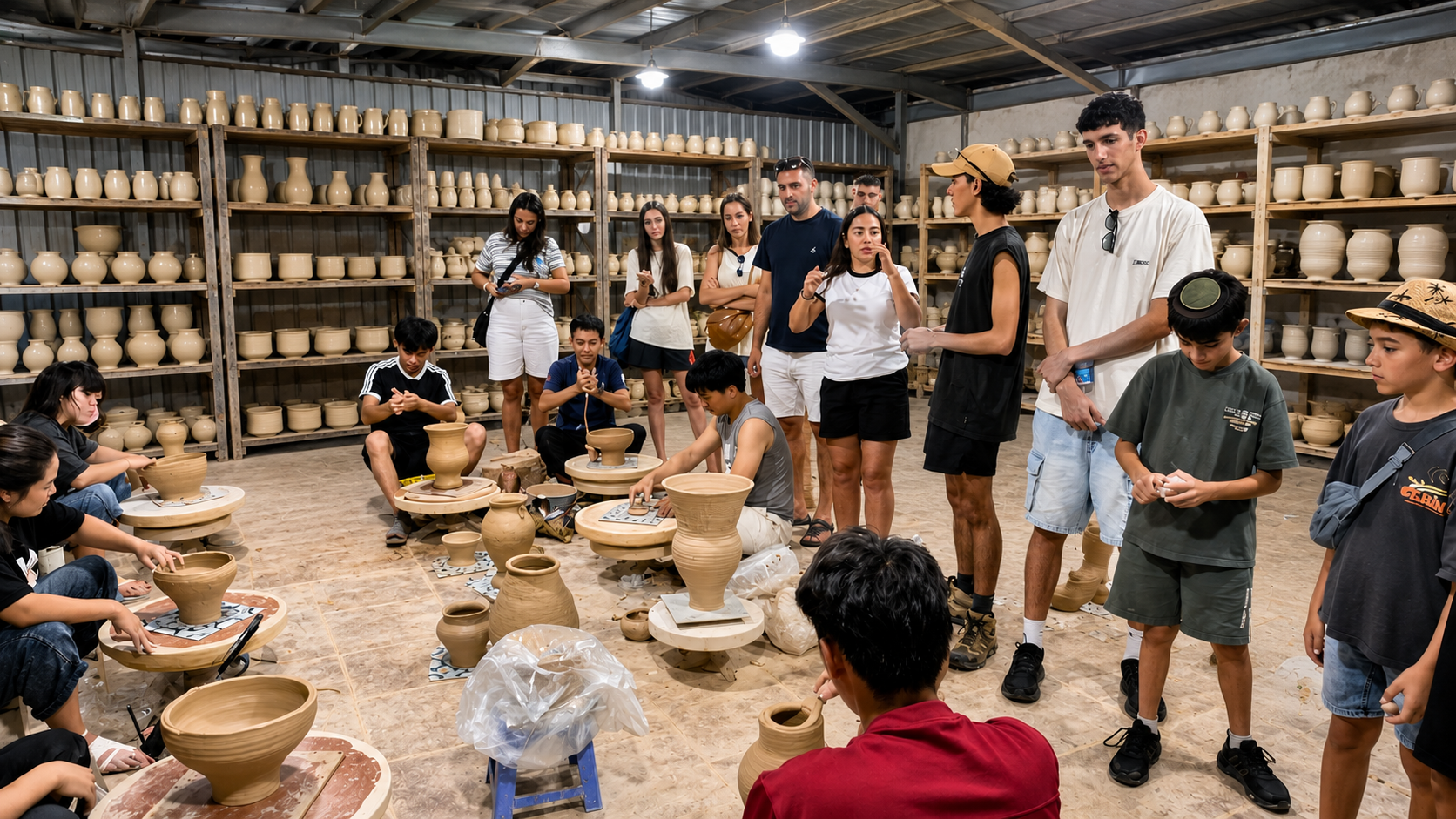
Small bowls, cups and vases can be formed on a pottery wheel. Handmade pieces may be built and refined gradually with simple tools and years of practised hand control. Larger decorative objects require careful planning so that the walls remain balanced as the clay rises.
Moulds are also used for products that need consistent dimensions or complex repeated forms. However, mould-making does not remove the human element. The mould itself must be designed and made accurately, and each ceramic form still needs to be removed, joined, trimmed and refined by hand.
This is why “moulded” should not automatically be understood as “mass-produced”. In a working Bát Tràng workshop, moulds and hand skills often work together.
3. Drying, Trimming and Hand-Finishing
Fresh clay contains a large amount of moisture and cannot go directly into a hot kiln. It must dry gradually and evenly.
During this stage, artisans trim rough edges, smooth surfaces, refine joins and correct small imperfections. Handles, relief decorations or other separate elements may be attached when the clay has reached the correct firmness.
Drying too quickly can cause cracking. Drying unevenly can distort the shape. The workshop team must consider the thickness of the ceramic, the weather and the scale of the piece before deciding when it is ready for the next stage.
The repeated rows of pale, unfinished ceramics seen inside Bát Tràng workshops are not yet final products. They are pieces waiting patiently between stages.
4. Decorating and Hand-Painting
Hand-painting is one of the most visually captivating parts of the Bát Tràng pottery-making process. Using fine brushes, artisans build patterns line by line across a curved ceramic surface.
Painting on pottery requires a different kind of control from painting on paper or canvas. The object may be round, large or difficult to rotate. The colour can also change after glazing and firing, so the painter must understand both the design and the behaviour of ceramic materials in the kiln.
Some patterns are rooted in familiar Vietnamese imagery, while others use contemporary flowers, landscapes, animals or abstract compositions. On large ceramic artworks, a single design may require many hours of concentrated work.
The most impressive part is often the apparent calm of the painter. What looks effortless in a short video reflects years of repetition, steady hands and intimate knowledge of the material.
5. Applying the Glaze
Glaze gives a ceramic its finished surface and can affect its colour, texture, depth and resistance to water. Depending on the product, glaze may be poured, dipped, sprayed or applied by hand.
At this stage, the visible coating may look very different from the final result. Heat transforms glaze inside the kiln, and small variations in thickness, temperature and atmosphere can influence the finished appearance.
This transformation helps explain the distinctive character of handmade ceramics. Even when artisans follow the same design and glaze recipe, subtle variations can make every piece feel individual.
Depending on the decorative method, painting and glazing may occur in a different order or require more than one firing. The production route is chosen according to the desired finish.
6. Firing and Final Inspection
Firing is the point at which fragile clay becomes durable ceramic. The kiln must reach and maintain the correct temperature for the clay body, decoration and glaze being used.
After firing, the kiln needs time to cool before the pieces can be handled safely. Artisans then inspect the results for cracks, warping, glaze faults and colour consistency.
Not every piece survives the complete journey. The final inspection is therefore an essential part of genuine ceramic production, not simply the last formality before a product reaches a shelf.
Bát Tràng’s preserved historic Lò Bầu, or gourd-shaped wood-fired kiln, offers a connection to an earlier era of production. Modern workshops generally use more controllable kilns, but the old kiln helps visitors understand the scale, heat and collective labour once required to fire ceramics.
Why a Real Workshop Visit Changes the Way You See Pottery
A finished cup may fit easily in one hand, yet its production can involve several specialists and many moments when something could go wrong.
Inside a working workshop, you notice details that a shop display cannot show:
- The concentration required to paint a smooth line on a curved surface.
- The hand-finishing still needed after a form comes out of a mould.
- The difference between damp clay, dry unfinished ware and glazed ceramic.
- The scale of large decorative pieces compared with everyday cups and bowls.
- The subtle variations that prove an object has passed through human hands.
These workshops are active places of production rather than staged demonstrations. The exact work visible on any day depends on current orders and the rhythm of each workshop. That unpredictability is part of what makes the visit authentic.
Make Pottery Before Meeting the Makers
The easiest way to appreciate an artisan’s skill is to try working with clay yourself.
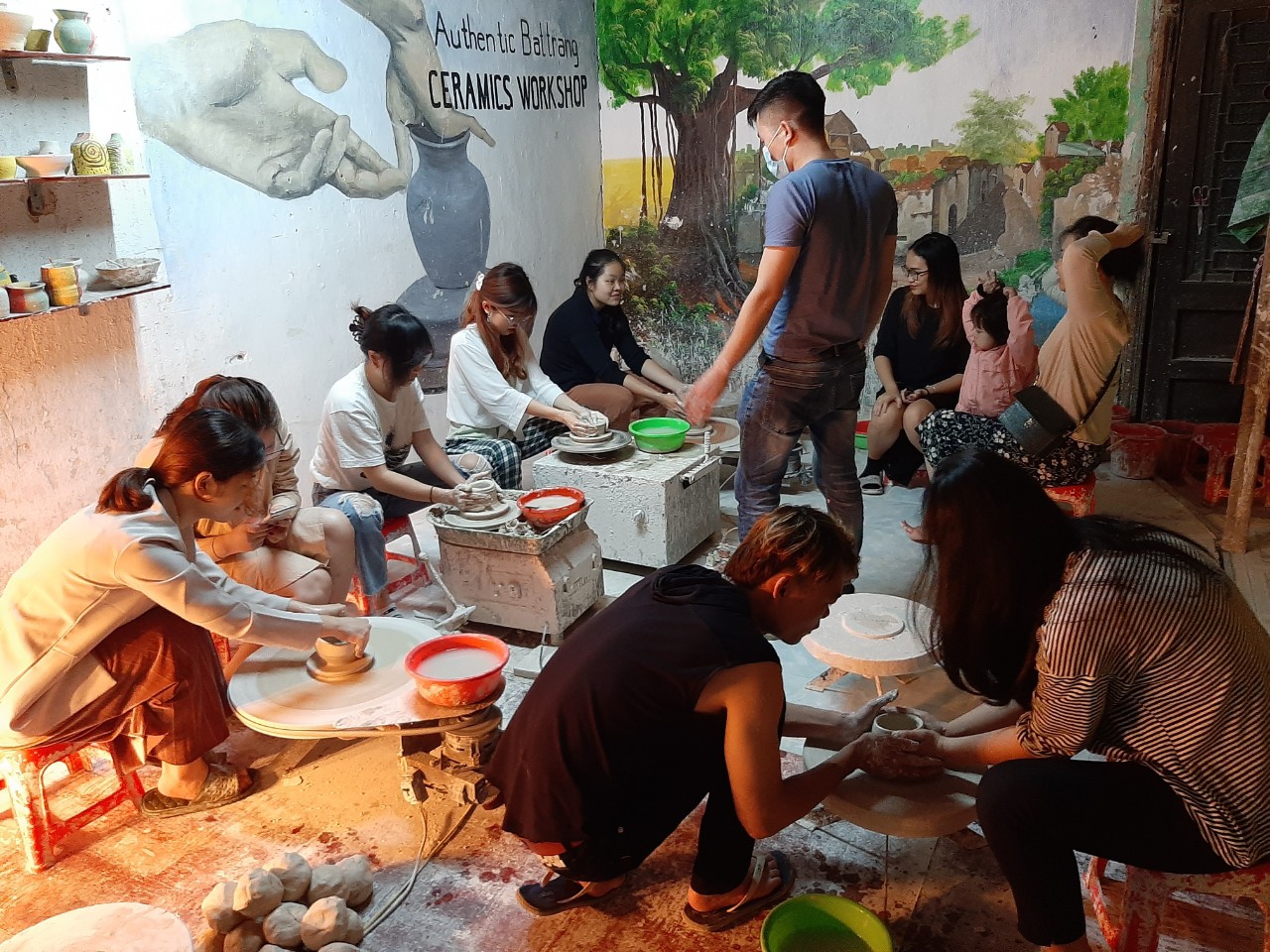
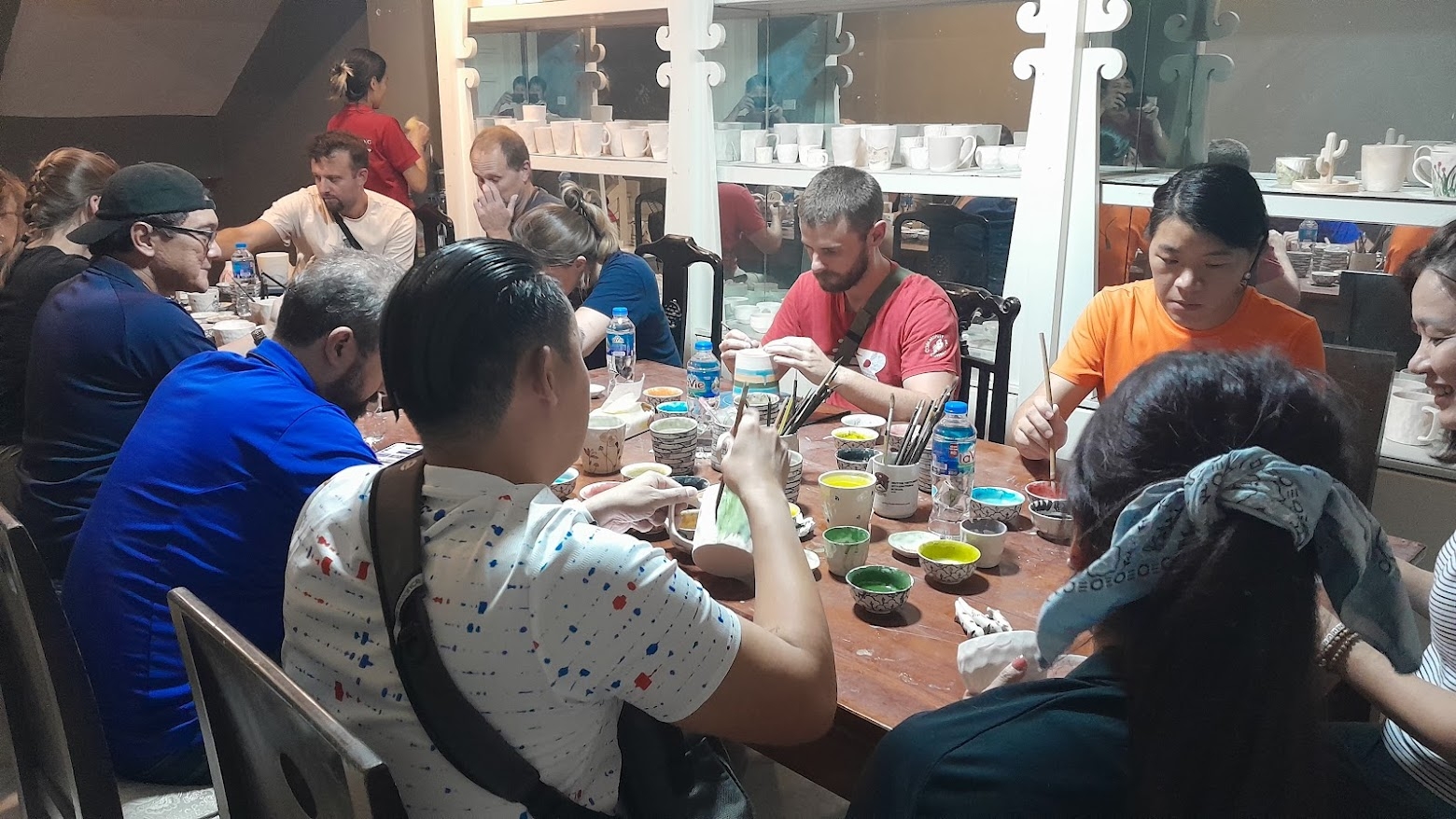
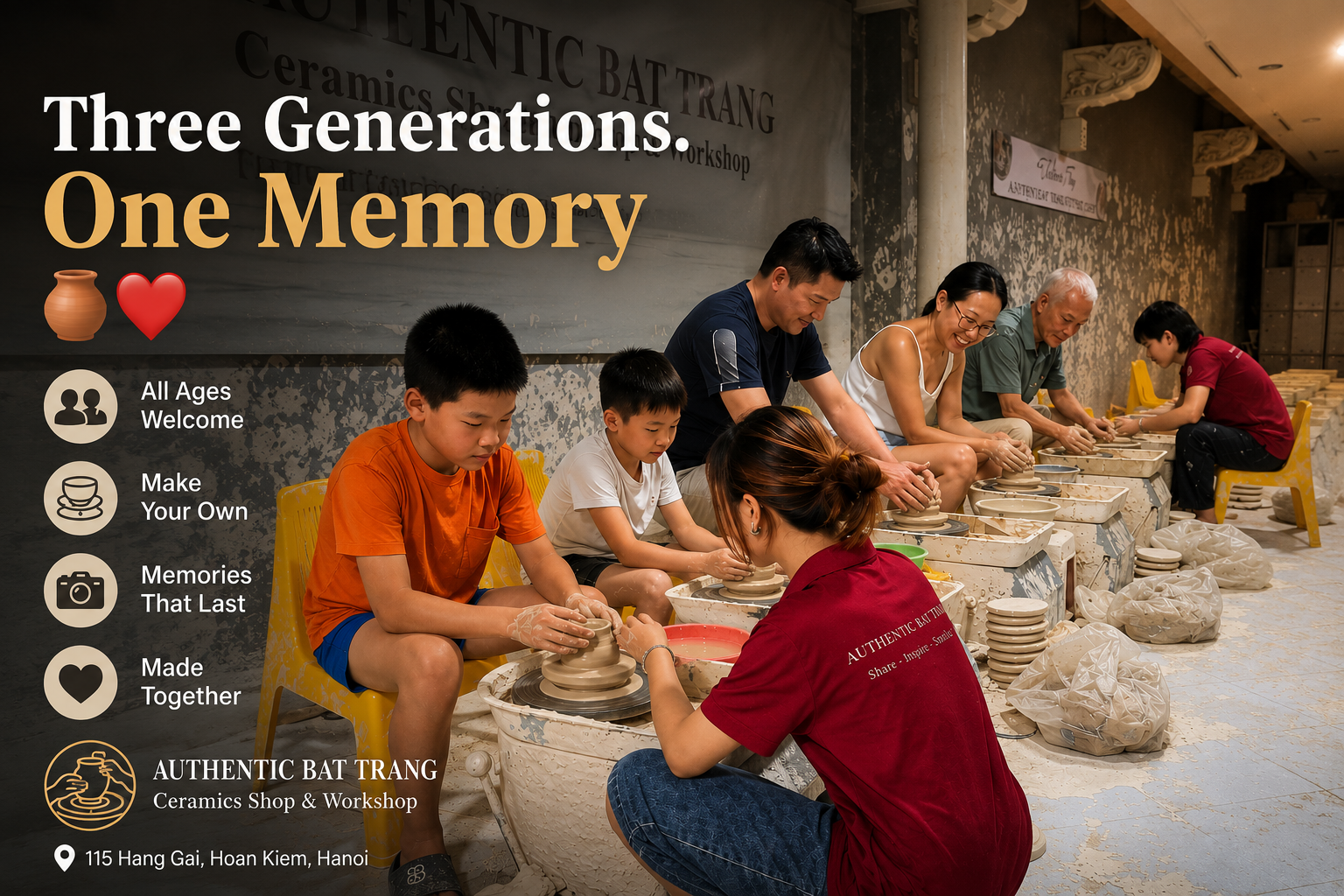
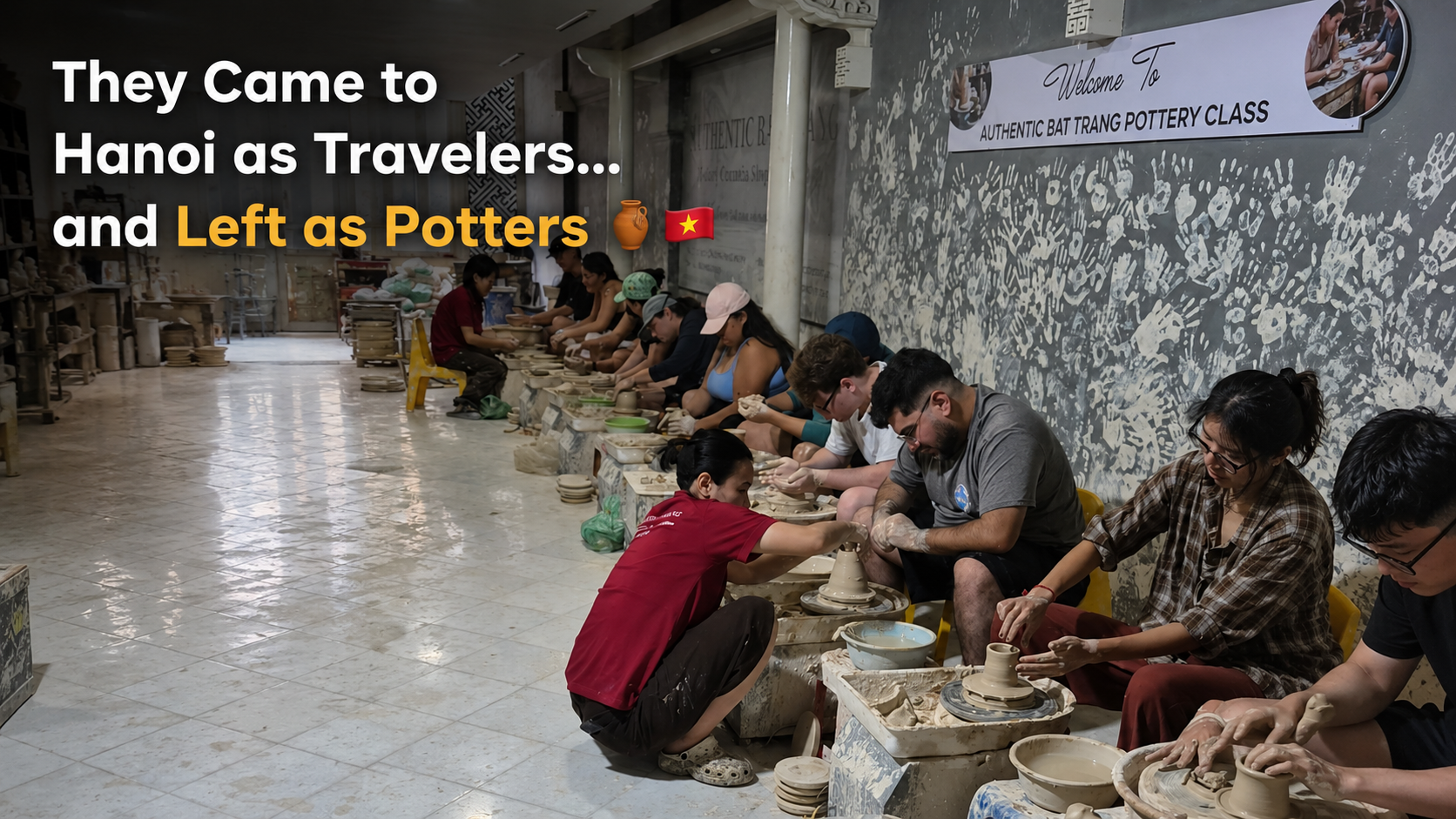
During a beginner-friendly pottery class in Hanoi Old Quarter, you learn how to centre clay and shape a simple cup, bowl, plate or small vase on an electric wheel. The clay may collapse, become uneven or move in an unexpected direction—and that experience immediately changes how you view the control of a professional potter.
Authentic Bát Tràng combines this hands-on introduction with visits to specialist workshops in the village. First, you experience the material. Then you meet the people who have spent years mastering it and follow the production journey beyond the wheel.
See the Complete Journey on a Bát Tràng Workshop Tour
The Bát Tràng Behind the Scenes: Artisan Workshop Tour & Pottery Class is designed for travellers who want to go beyond the market and understand how Vietnamese ceramics are really produced.
The half-day experience begins at Authentic Bát Tràng, 115 Hàng Gai in Hanoi Old Quarter. After a hands-on pottery class, guests travel to Bát Tràng with a local ceramics guide and visit working workshops specialising in clay preparation, traditional hand-forming, glazing, hand-painting, mould-making and large decorative vases.
The journey also includes the preserved historic Lò Bầu kiln, a local lunch and a walk through Bát Tràng Ancient Village before returning to central Hanoi.
Explore the full Bát Tràng pottery village tour from Hanoi and check availability.
Frequently Asked Questions
How is Bát Tràng pottery made?
Bát Tràng pottery is generally made through clay preparation, shaping, drying and hand-finishing, decoration, glazing, firing and final inspection. The exact sequence varies according to the product and decorative technique.
Is all Bát Tràng pottery completely handmade?
Different products use different methods. Some are thrown on a wheel or built by hand, while others use moulds to achieve consistent forms. Moulded pieces still require skilled manual work, including trimming, joining, smoothing, decorating, glazing and quality inspection.
How long does it take to finish a ceramic piece?
Production time varies with the size, thickness, decoration, drying conditions and firing schedule. A piece made during an Authentic Bát Tràng class normally requires approximately two to three days for drying, glazing and firing.
Can beginners make pottery in Hanoi?
Yes. No previous experience is required for a beginner pottery class. A teacher demonstrates how to centre and shape the clay and provides help throughout the session.
Can visitors enter working pottery workshops in Bát Tràng?
Some workshops are difficult to identify or access independently. A guided workshop tour connects visitors with specialist production spaces and explains what is happening at each stage. Because these are real workplaces, the order of visits and visible activities may change with the day’s production.
Where does the Bát Tràng tour begin?
The tour begins and finishes at Authentic Bát Tràng, 115 Hàng Gai, Hoàn Kiếm, Hanoi, within walking distance of Hoàn Kiếm Lake.
Discover the Hands Behind Bát Tràng Ceramics
Bát Tràng pottery is not defined by a single technique. Its character comes from the combined knowledge of clay preparers, potters, mould makers, painters, glazing specialists and kiln workers.
The next time you hold a piece of authentic Bát Tràng ceramic, look beyond its colour and shape. Consider the stages it has survived, the decisions made along the way and the hands that transformed ordinary clay into a lasting object.
Do not only see the finished pottery. Meet the people who make it.
Authentic Bát Tràng
115 Hàng Gai, Hoàn Kiếm, Hanoi
Website: www.authenticbattrang.vn
Email: info@authenticbattrang.vn